Abstract
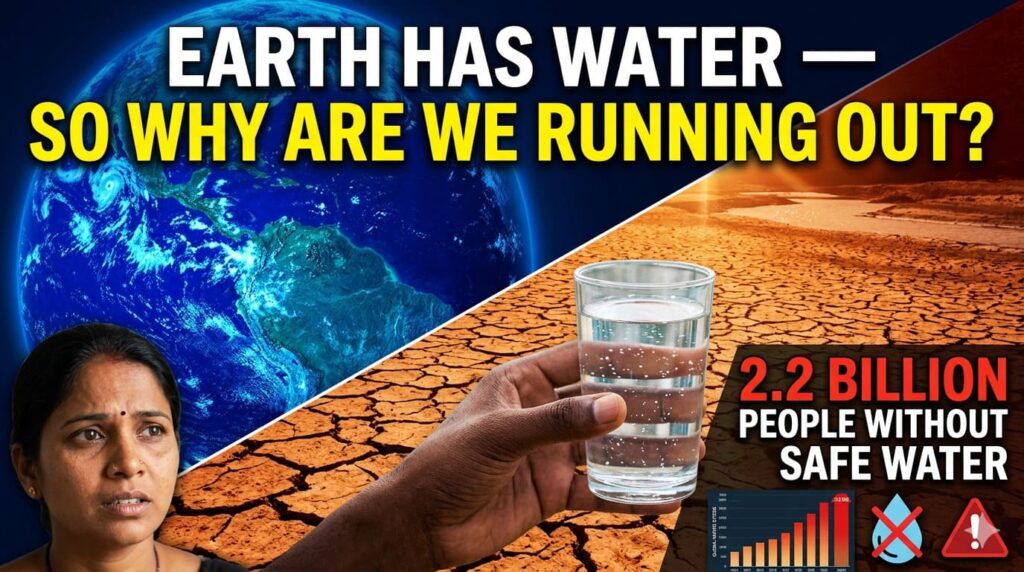
| Water covers approximately 71% of Earth’s surface, yet fewer than 3% of it is freshwater, and only a fraction of that is readily accessible. This paradox an apparently water-abundant planet experiencing escalating water scarcity lies at the heart of one of the twenty-first century’s most urgent crises. This research paper investigates the hydrological, anthropogenic, climatic, and political dimensions of the global water crisis. Drawing on peer-reviewed literature, data from international organizations such as the United Nations, the World Health Organization, and the World Resources Institute, alongside regional case studies, the paper explores how population growth, agricultural overuse, industrial pollution, climate change, and governance failures are driving water insecurity across every continent. The findings reveal that while Earth’s total water supply remains constant in volume, the distribution and quality of accessible freshwater is deteriorating rapidly. The paper concludes with evidence-based policy recommendations and an urgent call for integrated water resource management, technological innovation, and global cooperation. |
Table of Contents
Introduction
Water is the foundational element of life. It underpins food security, public health, energy production, economic development, and ecological stability. Yet, despite the fact that Earth is sometimes called the “Blue Planet” because of the vast oceans visible from space, the reality of usable freshwater is strikingly different. The total volume of water on Earth is approximately 1.386 billion cubic kilometres (km³), but of this, approximately 97.5% is saltwater found in the oceans and cannot be used for drinking, agriculture, or most industrial processes without expensive desalination.
Of the 2.5% that is freshwater, nearly 69% is locked in polar ice caps and glaciers, about 30% exists as deep groundwater, and only around 0.3% flows in rivers, lakes, and accessible aquifers the primary sources that billions of people depend on daily (Gleick, 1996; USGS, 2022). When we articulate this mathematically: of all the water on Earth, only approximately 0.007% is readily available for human and ecosystem use. This is not a small number in absolute terms it amounts to millions of km³ but it is finite, unevenly distributed, and increasingly stressed.
The global water crisis is therefore not simply a story of scarcity in volume. It is a crisis of distribution, governance, quality, and prioritization. As the global population approaches 8.1 billion (UN, 2023) and is projected to reach 9.7 billion by 2050, the demand for water continues to accelerate. Simultaneously, climate change is disrupting precipitation patterns, accelerating glacial melt, intensifying droughts and floods, and reducing the reliability of seasonal water sources.
Agricultural systems, which already consume approximately 70% of the world’s accessible freshwater, continue to expand. Industrial and domestic demand in fast-growing urban areas compound the pressure. And in many regions, decades of poor governance, underinvestment in water infrastructure, and inadequate regulatory frameworks have led to catastrophic mismanagement of water resources. This research paper addresses the central documentary question:
If Earth has enough water, why are we running out? It aims to provide a rigorous, evidence-based, and multidisciplinary answer one that traces the root causes of water insecurity, documents current conditions globally and regionally, and proposes a forward-looking framework for sustainable water management
Research Objectives
This paper is guided by the following research objectives:
- To explain the hydrological paradox between Earth’s total water supply and the availability of accessible freshwater.
- To identify and analyze the primary drivers of global water scarcity, including population growth, climate change, agricultural practices, industrialization, and governance failures.
- To examine regional case studies where water crises are most severe and draw comparative lessons.
- To evaluate existing policy responses, technological solutions, and international frameworks aimed at addressing water insecurity.
- To propose integrated recommendations for policymakers, communities, and international institutions.
Research Questions
The primary research question guiding this paper is:
“Why is a planet covered in water experiencing a global freshwater crisis?”
Secondary questions include:
- How do human activities amplify naturally occurring water stress?
- What is the role of climate change in reshaping water availability?
- Which populations are most vulnerable to water insecurity, and why?
- What policy instruments and technologies offer the most viable solutions?
Background Knowledge and Literature Review
The scientific understanding of Earth’s water has been built over centuries, from early hydrological observations by Leonardo da Vinci and Bernard Palissy in the Renaissance period to contemporary satellite-based monitoring systems. This section synthesizes key findings from the academic literature across hydrology, environmental science, political ecology, and development studies.
The Hydrological Cycle and Water Distribution
The hydrological cycle the continuous movement of water through evaporation, condensation, precipitation, and runoff is the planet’s natural water management system. Shiklomanov (1993) provided the foundational quantification of Earth’s water distribution, later refined by Gleick (1996) and the United States Geological Survey (USGS). These studies established that while the total water volume on Earth is essentially constant (due to the closed nature of the hydrological system), the spatial and temporal distribution of freshwater is highly variable.
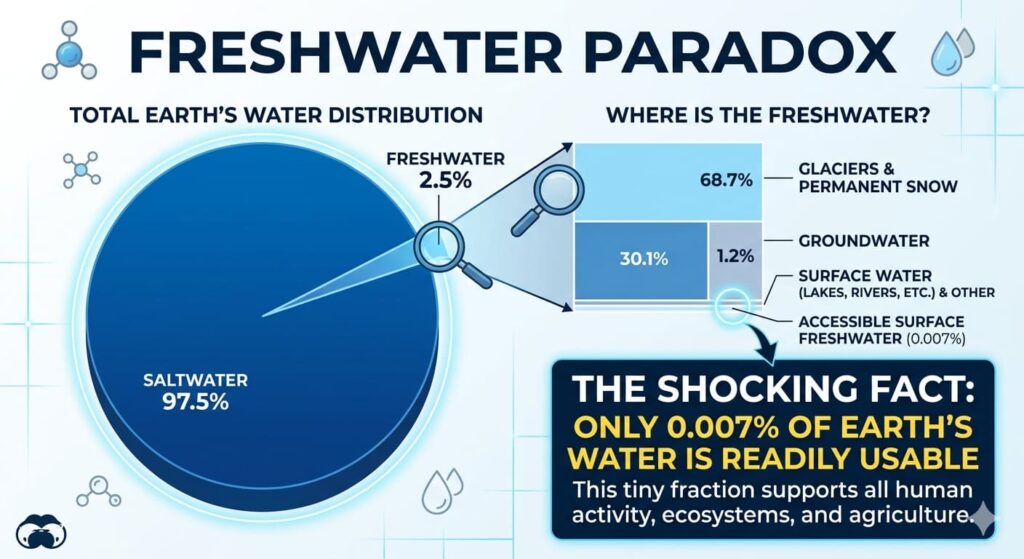
Freshwater resources are unequally distributed. Brazil, Russia, Canada, the United States, China, and Colombia together hold roughly 50% of the world’s renewable freshwater (World Bank, 2021). Regions such as the Middle East, North Africa, and Central Asia receive far less precipitation and have limited renewable freshwater per capita. The Mena (Middle East and North Africa) region, home to approximately 6% of the world’s population, holds less than 1.5% of the world’s renewable freshwater (FAO, 2021).
Defining Water Scarcity: Physical vs. Economic
Academic literature distinguishes between two forms of water scarcity. Physical water scarcity occurs when the natural availability of water is insufficient to meet demand common in arid and semi-arid regions. Economic water scarcity occurs where water exists but populations lack the financial resources, infrastructure, or governance capacity to access it common in parts of sub-Saharan Africa and South Asia (IWMI, 2007).
Falkenmark and Widstrand (1992) introduced the concept of the water stress indicator: a country is considered water-stressed when annual freshwater availability falls below 1,700 m³ per person, water-scarce below 1,000 m³, and severely water-scarce below 500 m³. Using this framework, the World Resources Institute (2023) found that 25 countries home to one-quarter of the global population currently face extremely high water stress, withdrawing more than 80% of their available supply each year.
Historical Trajectories of Water Use
Global water withdrawals have increased dramatically over the past century. Postel et al. (1996) documented a six-fold increase in water use between 1900 and 1995, driven primarily by agricultural expansion during the Green Revolution. Shiklomanov (2000) projected that global water withdrawals would reach approximately 5,000 km³ per year by 2025, a figure broadly validated by subsequent empirical studies (Wada et al., 2016).
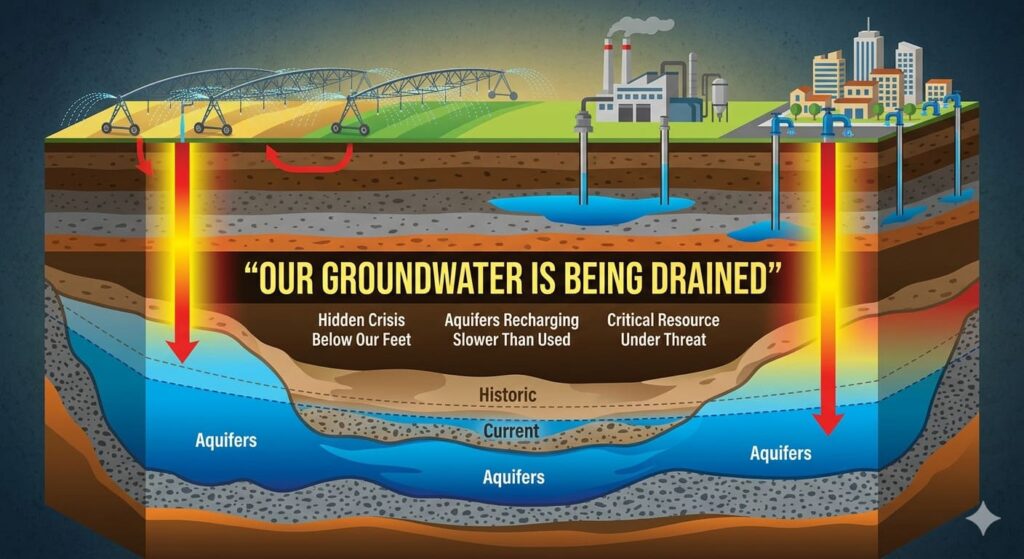
Groundwater, which supplies approximately 2.5 billion people and irrigates 40% of the world’s irrigated agriculture (Famiglietti, 2014), has been severely overexploited. Remote-sensing data from NASA’s GRACE (Gravity Recovery and Climate Experiment) mission revealed the depletion of major aquifer systems including the North China Plain, the High Plains Aquifer in the United States, the Indus Basin, and the Arabian Aquifer at rates far exceeding natural recharge (Rodell et al., 2009; Famiglietti et al., 2011).
Climate Change and Water
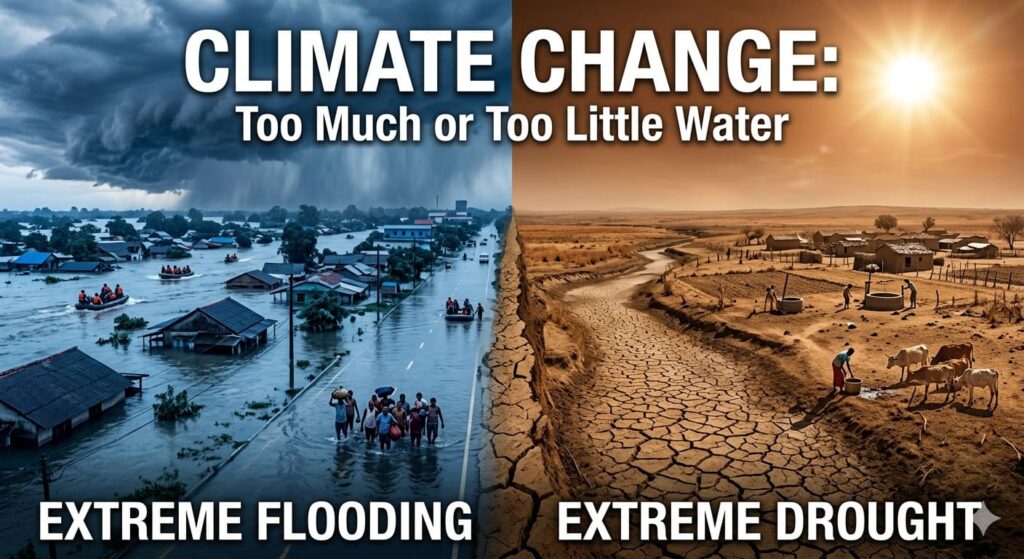
The relationship between climate change and water availability is complex and non-linear. The Intergovernmental Panel on Climate Change (IPCC) has consistently highlighted water as a primary medium through which climate change affects societies and ecosystems. The IPCC Sixth Assessment Report (2021) concluded with high confidence that climate change intensifies the water cycle, leading to more extreme rainfall events in wet regions while exacerbating droughts in already dry areas described as the “wet gets wetter, dry gets drier” paradigm.
Glacial retreat poses an especially acute threat. Glaciers function as “water towers” for hundreds of millions of people, regulating river flows. In the Hindu Kush Himalayan region alone, glaciers supply water to river systems including the Ganges, Indus, Brahmaputra, Yangtze, and Mekong that sustain approximately 1.9 billion people. Immerzeel et al. (2010) demonstrated that changes in glacial contribution significantly affect streamflow seasonality, with consequences for agriculture, hydropower, and urban water supply.
Political Ecology and Water Governance
Scholars in political ecology have emphasized that water crises are not simply natural phenomena but are deeply shaped by power structures, institutional arrangements, and colonial legacies. Molle et al. (2009) developed the concept of “hydraulic mission” the tendency of states to construct large water infrastructure (dams, canals) as symbols of modernity and control, often at the expense of local communities and ecological systems. These approaches frequently failed to achieve equitable or sustainable water outcomes.
Ostrom’s (1990) landmark work on governing the commons demonstrated that communities can manage shared water resources sustainably without privatization or top-down state control through clearly defined rules, monitoring mechanisms, and conflict resolution procedures. However, her models assumed relatively small, bounded communities, and scaling these insights to complex, transboundary river basins remains a challenge.
Research Objectives and Hypothesis
The global water crisis is not primarily a consequence of absolute scarcity of water on Earth, but is rather the result of a convergence of anthropogenic pressures including unsustainable agricultural extraction, industrial pollution, urban population growth, inadequate governance, and climate change-induced disruption acting upon a finite and unevenly distributed freshwater supply.
This hypothesis implies that the water crisis is fundamentally a problem of human systems rather than natural endowment. It also implies that solutions lie primarily in reforming governance, changing consumption patterns, investing in technology, and addressing climate change rather than simply “finding more water.
Sub-Hypotheses
- Agricultural water use, accounting for approximately 70% of global freshwater withdrawals, is the single most significant driver of water depletion.
- Climate change is accelerating water scarcity in already-stressed regions by disrupting precipitation patterns and reducing glacial reserves.
- Poor governance, including corruption, lack of data, absent regulation, and exclusion of marginalized communities, exacerbates water insecurity beyond what physical conditions alone would predict.
- Technological solutions, while necessary, are insufficient without corresponding institutional and policy reform.
Research Methodology
This research employs a mixed-methods approach, integrating quantitative data analysis with qualitative case study investigation and policy analysis. The methodology is organized around three pillars:
Secondary Data Analysis (Quantitative)
The primary quantitative data used in this study is drawn from authoritative international databases:
- AQUASTAT (FAO Global Information System on Water and Agriculture): provides country-level data on water resources, water use by sector, and irrigation infrastructure.
- NASA GRACE Satellite Data: provides remote-sensing measurements of groundwater depletion through gravity anomaly measurements.
- IPCC Assessment Reports (AR5 and AR6): provide climate projections and impact assessments related to water.
- World Resources Institute Aqueduct Database: provides water risk maps at sub-watershed scale for 189 countries.
- WHO/UNICEF Joint Monitoring Programme (JMP): provides data on access to safe drinking water and sanitation.
- World Bank Development Indicators: provides socioeconomic and infrastructure data correlated with water security.
Statistical approaches include trend analysis of water withdrawal data over time, correlation analysis between water stress indicators and development indicators (GDP per capita, Human Development Index), and scenario modeling based on published projections.
Case Study Method (Qualitative)
Six regional case studies are examined in depth, selected to represent diverse geographical, political, and developmental contexts:
| Indicator | Value | Source / Year |
|---|---|---|
| Aral Sea Basin | Central Asia | Over-irrigation collapse |
| Cape Town, South Africa | Sub-Saharan Africa | Urban drought and Day Zero |
| Indus River Basin | South/Southwest Asia | Transboundary stress & glacial retreat |
| North China Plain | East Asia | Groundwater over-extraction |
| Colorado River Basin | North America | Over-allocation and climate stress |
| Chennai, India | South Asia | Urban water failure & inequality |
For each case study, the following dimensions are analyzed: (a) historical context of water use, (b) triggers and manifestations of the crisis, (c) governance and institutional responses, (d) outcomes for different population groups, and (e) lessons applicable to other regions.
Policy Analysis
A structured review of international frameworks, national policies, and local initiatives is conducted, including: the UN Sustainable Development Goal 6 (Clean Water and Sanitation), the Dublin Principles on Water Resource Management (1992), the 2015 Paris Agreement’s implications for water, national Integrated Water Resource Management (IWRM) plans, and examples of innovative water policy from Israel, Singapore, and the Netherlands.
Limitations
This study acknowledges several limitations
- Inconsistencies in national water use reporting across countries, which may affect comparative analysis.
- The dynamic nature of climate science means some projections may have evolved since publication.
- Case studies are illustrative, not exhaustive; generalization requires caution.
- Primary data collection (surveys, field research) was not conducted; the study relies entirely on secondary sources.
Results and Findings
The Freshwater Paradox: Numbers That Tell the Story
The fundamental statistics reveal the stark nature of the freshwater paradox:
| Indicator | Value | Source / Year |
|---|---|---|
| Total water on Earth | ~1.386 billion km³ | USGS, 2022 |
| Freshwater (all forms) | ~35 million km³ (2.5%) | Gleick, 1996 |
| Glaciers & ice caps | ~24 million km³ (69%) | USGS, 2022 |
| Groundwater (total) | ~10.6 million km³ (30%) | USGS, 2022 |
| Surface water (rivers, lakes) | ~93,100 km³ (0.3%) | USGS, 2022 |
| Readily accessible freshwater | ~0.007% of total water | Gleick, 1996 |
| Global water withdrawals/year | ~4,600 km³/year | FAO AQUASTAT, 2021 |
| Agriculture share of withdrawals | ~70% | FAO, 2021 |
| People lacking safe water access | ~2.2 billion | WHO/UNICEF JMP, 2023 |
| Countries under high water stress | 25 (1/4 of world population) | WRI, 2023 |
These figures illustrate that while the planet contains vast amounts of water, the accessible, usable portion is limited and is being withdrawn faster than it is replenished in many regions. The WRI (2023) calculated that 17 countries including India, Mexico, and several Middle Eastern nations currently experience extremely high water stress, withdrawing more than 80% of their available annual supply. This leaves no buffer for drought years and leads to chronic depletion.
Agriculture: The Primary Driver
The agricultural sector dominates global water use. In developing countries, agriculture accounts for up to 90% of freshwater withdrawals (FAO, 2021). The expansion of irrigated agriculture during the twentieth century enabled the Green Revolution and supported global food security, but at enormous hydrological cost.
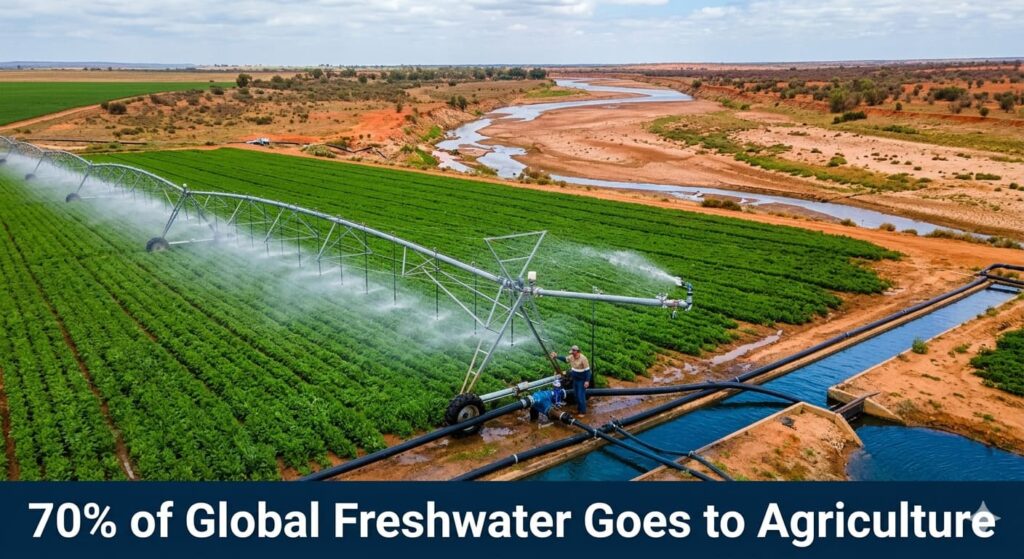
A critical finding is the widespread inefficiency of irrigation systems. Flood irrigation the most common method globally wastes an estimated 30–50% of applied water through evaporation and runoff before it can benefit crops (Postel, 1997). In countries like Pakistan and Egypt, irrigation efficiency rates remain below 40%, meaning more than half of all diverted water never reaches its intended use.
The concept of virtual water (Allan, 1998) helps explain how water scarcity is traded internationally through food and commodity exports. When water-scarce countries import food, they effectively import water embedded in that food’s production described as virtual water trade. The trade of virtual water has grown substantially, with approximately 2,320 km³ of virtual water traded globally each year (Hoekstra & Mekonnen, 2012), raising questions about whether food trade systems adequately value the water embedded in traded goods.
Groundwater Depletion: The Hidden Crisis
Groundwater stored in aquifers accumulated over thousands of years is being mined at alarming rates in major agricultural regions. Famiglietti (2014) synthesized NASA GRACE data to show that the world’s 37 largest aquifers, 21 are being consumed beyond their natural recharge rate. Eight of these are described as “overstressed” showing virtually no replenishment.
In the Indus River Basin, shared by Pakistan and India, GRACE data revealed groundwater losses of approximately 6.0 ± 1.5 km³/year between 2002 and 2008 (Rodell et al., 2009). In the North China Plain, groundwater tables have declined by 30 meters in some areas over the past four decades (Foster & Garduño, 2013). In the High Plains Aquifer (Ogallala) of the United States, some areas have lost more than 50% of their original saturated thickness (McGuire, 2017).
The critical concern is timescale: most major aquifer systems recharge on geological timescales of hundreds to thousands of years. Once depleted, they cannot be recovered within any human-relevant planning horizon. This makes groundwater over-extraction a fundamentally irreversible process.
Climate Change: Disrupting the Water System
The IPCC AR6 (2021) confirmed that climate change has already altered global precipitation patterns, extreme weather events, and the cryosphere (ice and snow systems). Key findings relevant to water include:
- Global mean precipitation is increasing at approximately 2% per degree of warming, but this increase is concentrated in already-wet regions.
- The frequency and intensity of droughts has increased in the Mediterranean, Central America, southern Africa, and parts of Asia.
- Glacial mass loss has accelerated globally. The Hindu Kush Himalayas have lost approximately 40% of their ice volume since the Little Ice Age, with accelerated loss since the 1970s.
- Extreme precipitation events have intensified, increasing flood risk while simultaneously reducing groundwater recharge in many regions (because rapid runoff bypasses infiltration).
A study by Schewe et al. (2014) in Nature Climate Change modeled global hydrological models to project that climate change could expose an additional 40% of the global population to severe river flood risk by 2070, while simultaneously exposing hundreds of millions more to water scarcity. These twin threats too much water in some places, too little in others characterize the climate-water nexus.
Urbanization and Domestic Water Demand
The world’s urban population is projected to grow from approximately 4.4 billion in 2020 to 6.7 billion by 2050 (UN, 2019), with nearly 90% of urban growth occurring in Africa and Asia. Urban water demand is typically higher per capita than rural demand, and urban water systems require large infrastructure investments that many rapidly growing cities cannot afford.
A recurring pattern observed across the case studies is the emergence of urban water crises as rapid growth outpaces infrastructure. Chennai, India a city of 10 million completely exhausted its four main reservoirs in June 2019, forcing residents to rely on water trucked from rural areas at enormous cost. Similar crises unfolded in Cape Town, South Africa (2018), Karachi, Pakistan (ongoing), and Baghdad, Iraq.
Water Quality: The Invisible Dimension of Scarcity
Water scarcity is not only about quantity. Water quality degradation effectively reduces the usable water supply by rendering physically available water unsafe or unusable. The WHO/UNICEF JMP (2023) found that while 2.2 billion people lack access to safely managed drinking water, a further 3.5 billion lack safely managed sanitation, leading to widespread fecal contamination of water sources.
Industrial pollution adds further stress. In China, surveys of groundwater quality in 2018 revealed that approximately 60% of monitored groundwater sites in major cities had poor or very poor water quality (China MEE, 2018). Pharmaceutical contaminants, agricultural fertilizers (leading to nitrate pollution), and heavy metals from mining are emerging as serious quality concerns globally.
Governance Failures: The Political Dimension
Perhaps the most striking finding across the case studies is the centrality of governance failure in driving water crises. Physical water stress alone rarely explains the severity of a water crisis; governance factors consistently amplify or mitigate physical conditions.
The Aral Sea once the fourth-largest lake in the world was reduced to 10% of its former volume by Soviet-era irrigation policies that diverted the Amu Darya and Syr Darya rivers for cotton production. This represents arguably the greatest man-made environmental disaster in history, driven entirely by political decisions rather than natural scarcity (Micklin, 2007).
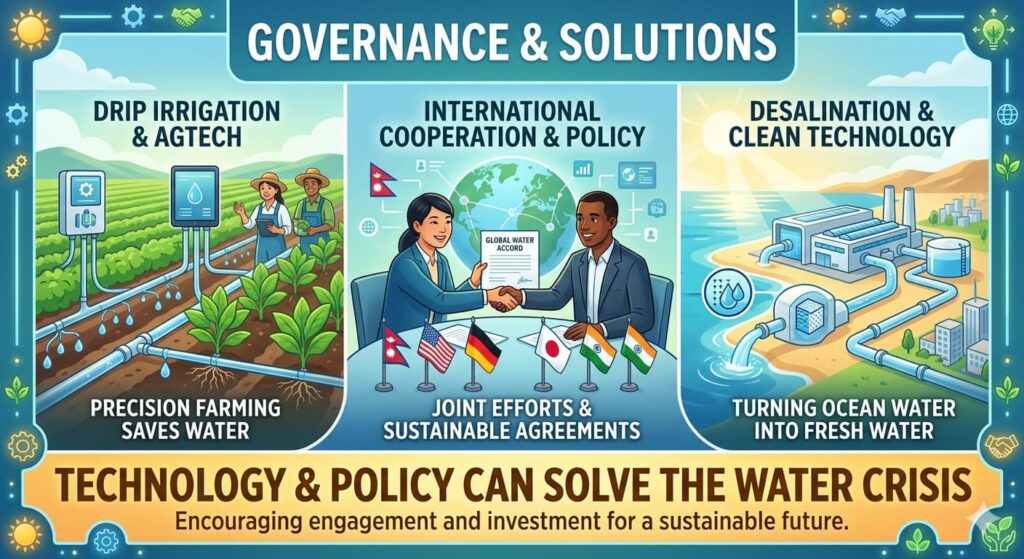
In contrast, Israel a country with limited natural freshwater resources has achieved water security through aggressive investment in drip irrigation technology, wastewater recycling (recycling approximately 90% of wastewater for agricultural use), and desalination (now supplying 80% of domestic water needs). This illustrates that governance, technology, and investment can overcome physical scarcity.
Discussion
The findings of this research strongly support the central hypothesis: Earth’s water crisis is fundamentally anthropogenic in origin. While natural variability and physical geography create baseline conditions of scarcity or abundance, human decisions about what to grow, where to live, how to govern, and how to price water overwhelmingly determine whether populations experience water security or water crisis.
The Demand-Supply Imbalance
The evidence reveals a fundamental structural problem: global water demand is growing faster than supply can sustainably accommodate. Population growth, dietary shifts toward more water-intensive foods (particularly meat), industrial expansion, and rising living standards are all driving demand upward. Meanwhile, supply is constrained by natural limits, further restricted by pollution, and increasingly disrupted by climate change.
The intersection of supply constraints and rising demand creates a structural deficit in water-stressed regions that cannot be resolved through any single intervention. A systems-level response is required, addressing both demand reduction and supply augmentation simultaneously.
The Equity Dimension
A critical finding that emerges from the data is the profoundly inequitable distribution of water insecurity. While wealthy nations generally have the infrastructure and institutional capacity to manage water stress effectively, low-income populations particularly in rural sub-Saharan Africa, South Asia, and parts of Latin America bear a disproportionate burden of water insecurity.
Women and girls in water-scarce regions spend an estimated 200 million hours per day collecting water (UNDP, 2016) time that could be spent in education, economic activity, or rest. This opportunity cost perpetuates cycles of poverty and gender inequality, demonstrating that water insecurity is not a purely environmental problem but a deep social justice issue.
The privatization debate intersects with equity concerns. While private sector involvement can bring investment and efficiency to water infrastructure, commodification of water access can exclude the poorest communities when water is priced according to market mechanisms. The human right to water recognized by the United Nations in 2010 provides a normative framework for ensuring that basic water needs are prioritized above commercial interests.
The Climate Multiplier
The research confirms that climate change functions as a “threat multiplier” for water insecurity. It does not create water stress from scratch but intensifies existing vulnerabilities, makes previously reliable water sources unreliable, and disproportionately affects the regions and populations least responsible for greenhouse gas emissions. This creates a profound climate justice dimension to the water crisis.
Adaptation measures such as constructing water storage infrastructure to capture intensified precipitation events, shifting to drought-tolerant crop varieties, and restoring wetlands to buffer against extremes are urgently needed. However, many of the countries most vulnerable to climate-driven water stress have the fewest resources to invest in adaptation.
Technology: Necessary but Insufficient
Technological innovations in water management drip irrigation, desalination, wastewater recycling, leak detection, real-time water quality monitoring, precision agriculture have demonstrated significant potential to reduce water stress. Israel’s experience shows that technology-led water management can transform a water-scarce nation into one of relative water security.
However, technology deployment is constrained by cost, technical capacity, and institutional readiness. Desalination, for instance, remains energy-intensive and expensive, making it accessible primarily to wealthy Gulf states and economically advanced nations. For the 2.2 billion people currently lacking safe water access mostly in low-income countries the most needed interventions are often basic piped infrastructure, sanitation systems, and water treatment capacity that have existed for over a century.
This highlights a critical gap: the technology exists to solve many dimensions of the water crisis, but the political will, investment, and governance structures to deploy it equitably are lacking.
The Transboundary Challenge
Approximately 310 transboundary river basins cover nearly 50% of Earth’s land area and are shared by two or more countries. Water from these shared systems frequently becomes a source of geopolitical tension referred to in the literature as “water wars” though actual armed conflict directly and solely over water remains rare (Wolf, 1998). Instead, water disputes typically manifest as diplomatic tensions, unilateral dam construction, and negotiation breakdowns.
Major tension points include the Nile Basin (Ethiopia’s Grand Renaissance Dam and downstream concerns of Egypt and Sudan), the Mekong River (Chinese dam construction and downstream impacts in Southeast Asia), and the Indus Treaty (tensions between India and Pakistan). Effective transboundary water governance requires international cooperation frameworks that prioritize equitable sharing, environmental flow requirements, and joint data collection all of which remain underdeveloped.
Conclusion and Recommendations
This research paper has demonstrated that the global water crisis is real, urgent, and fundamentally human-made. Earth does not lack water in absolute terms it lacks equitable, sustainable, and well-governed access to the small fraction of water that is usable. The convergence of population growth, agricultural over-extraction, climate disruption, industrial pollution, urban expansion, and governance failures has produced a crisis that threatens the foundations of food security, public health, economic development, and geopolitical stability.
The trajectory is deeply concerning: without fundamental changes in how water is managed, allocated, and valued, the crisis will worsen significantly by mid-century. The populations most at risk are those already experiencing poverty, gender inequality, and climate vulnerability and who have the least agency to change the systemic forces driving their water insecurity.
However, this research also reveals cause for cautious optimism. Solutions exist. Proven technologies, policy frameworks, and governance models have demonstrated that water security is achievable even under conditions of physical scarcity. The question is not whether humanity can solve the water crisis it is whether it will choose to do so with the urgency, equity, and investment the crisis demands.
Policy Recommendations
Based on the research findings, the following evidence-based recommendations are proposed:
Reform Agricultural Water Pricing and Governance: Eliminate subsidies that encourage wasteful irrigation; mandate the adoption of drip and micro-irrigation systems; introduce tradeable water permits in over-stressed basins; and establish participatory water governance structures that include smallholder farmers.
Accelerate Climate Adaptation: Invest in water storage infrastructure to capture intensified precipitation; restore forests and wetlands as natural water regulators; develop climate-resilient crop varieties and farming systems; and integrate water security into national climate adaptation plans.
Reform Urban Water Systems: Prioritize investment in piped water and sanitation infrastructure in rapidly growing cities; implement universal smart metering; incentivize water recycling and rainwater harvesting; and eliminate illegal connections and non-revenue water losses.
Protect and Restore Groundwater: Establish legally binding groundwater extraction limits in over-stressed aquifers; invest in managed aquifer recharge; and create international monitoring frameworks for shared transboundary aquifers.
Strengthen Transboundary Water Governance: Finalize and operationalize river basin treaties for all major shared watercourses; establish neutral data-sharing platforms; and create binding dispute resolution mechanisms under international water law.
Recognize Water as a Human Right in Practice: Ensure that pricing and allocation systems protect the basic water needs of the poorest communities; hold governments accountable for progressive realization of water rights; and prioritize water access in development finance.
Invest in Water Science and Innovation: Scale funding for water research, including improved remote sensing of groundwater, affordable decentralized desalination, and AI-driven water system optimization; and transfer clean water technologies to low-income countries.
Directions for Future Research
Several important research gaps merit further investigation:
- Long-term monitoring studies of groundwater depletion rates and aquifer recovery potential under managed recharge.
- Social impact assessments of water pricing reforms on different income groups.
- Comparative governance analysis of what distinguishes successful from unsuccessful transboundary water agreements.
- Integration of indigenous and traditional water management knowledge into formal governance systems.
- Economic modeling of the full cost of water insecurity on national development trajectories.
Water is life. The choices made in the next decade will determine whether billions of people have enough of it.
References / Bibliography
Note: All references follow APA 7th Edition format.
Allan, J. A. (1998). Virtual water: A strategic resource, global solutions to regional deficits. Ground Water, 36(4), 545–546.
China Ministry of Ecology and Environment (MEE). (2018). China ecological environment status bulletin. MEE.
Falkenmark, M., & Widstrand, C. (1992). Population and water resources: A delicate balance. Population Bulletin, 47(3), 1–36.
Famiglietti, J. S. (2014). The global groundwater crisis. Nature Climate Change, 4(11), 945–948.
Famiglietti, J. S., et al. (2011). Satellites measure recent rates of groundwater depletion in California’s Central Valley. Geophysical Research Letters, 38(3), L03403.
Food and Agriculture Organization (FAO). (2021). AQUASTAT: Global information system on water and agriculture. FAO. https://www.fao.org/aquastat
Foster, S., & Garduño, H. (2013). Groundwater-resource governance: Are governments and stakeholders responding to the challenge? Hydrogeology Journal, 21(2), 317–320.
Gleick, P. H. (1996). Water resources. In S. H. Schneider (Ed.), Encyclopedia of Climate and Weather (Vol. 2, pp. 817–823). Oxford University Press.
Hoekstra, A. Y., & Mekonnen, M. M. (2012). The water footprint of humanity. Proceedings of the National Academy of Sciences, 109(9), 3232–3237.
Immerzeel, W. W., van Beek, L. P. H., & Bierkens, M. F. P. (2010). Climate change will affect the Asian water towers. Science, 328(5984), 1382–1385.
International Water Management Institute (IWMI). (2007). Water for food, water for life: A comprehensive assessment of water management in agriculture. Earthscan.
Intergovernmental Panel on Climate Change (IPCC). (2021). Climate change 2021: The physical science basis. Contribution of Working Group I to the Sixth Assessment Report. Cambridge University Press.
McGuire, V. L. (2017). Water-level and recoverable water in storage changes: High Plains Aquifer, predevelopment to 2015 and 2013–15 (USGS Scientific Investigations Report 2017-5040). U.S. Geological Survey.
Micklin, P. (2007). The Aral Sea disaster. Annual Review of Earth and Planetary Sciences, 35, 47–72.
Molle, F., Mollinga, P., & Wester, P. (2009). Hydraulic bureaucracies and the hydraulic mission: Flows of water, flows of power. World Development, 37(S1), 328–339.
NASA Jet Propulsion Laboratory. (2022). GRACE Follow-On: Groundwater depletion data. NASA. https://grace.jpl.nasa.gov
Ostrom, E. (1990). Governing the commons: The evolution of institutions for collective action. Cambridge University Press.
Postel, S. L. (1997). Last oasis: Facing water scarcity. W. W. Norton.
Postel, S. L., Daily, G. C., & Ehrlich, P. R. (1996). Human appropriation of renewable fresh water. Science, 271(5250), 785–788.
Rodell, M., Velicogna, I., & Famiglietti, J. S. (2009). Satellite-based estimates of groundwater depletion in India. Nature, 460(7258), 999–1002.
Schewe, J., et al. (2014). Multimodel assessment of water scarcity under climate change. Proceedings of the National Academy of Sciences, 111(9), 3245–3250.
Shiklomanov, I. A. (1993). World fresh water resources. In P. H. Gleick (Ed.), Water in Crisis: A Guide to the World’s Fresh Water Resources (pp. 13–24). Oxford University Press.
Shiklomanov, I. A. (2000). Appraisal and assessment of world water resources. Water International, 25(1), 11–32.
United Nations. (2010). Human right to water and sanitation (Resolution A/RES/64/292). UN General Assembly.
United Nations. (2019). World urbanization prospects: The 2018 revision. UN Department of Economic and Social Affairs.
United Nations. (2023). World population prospects 2022. UN Population Division.
United Nations Development Programme (UNDP). (2016). Human development report 2016: Human development for everyone. UNDP.
United States Geological Survey (USGS). (2022). The world’s water: Distribution of Earth’s water. USGS. https://www.usgs.gov/special-topics/water-science-school
Wada, Y., et al. (2016). Modeling global water use for the 21st century: The water futures and solutions initiative (WFaS). Geoscientific Model Development, 9(1), 175–222.
Wolf, A. T. (1998). Conflict and cooperation along international waterways. Water Policy, 1(2), 251–265.
World Bank. (2021). Water: Overview. World Bank Group. https://www.worldbank.org/en/topic/water/overview
World Health Organization & UNICEF. (2023). Progress on household drinking water, sanitation and hygiene 2000–2022: Special focus on gender. WHO & UNICEF.
World Resources Institute (WRI). (2023). Aqueduct 4.0: Updated decision-relevant global water risk indicators. WRI.
Some Suggested Reads
The Science of Addiction: The Hidden War on Your Brain