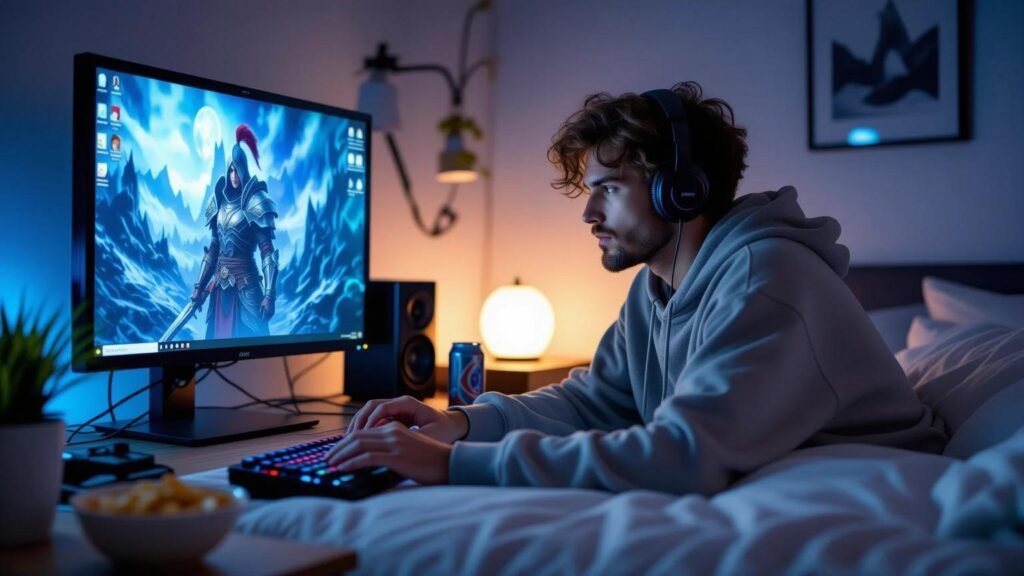
At 11:30 p.m., a player decides to finish one final match before going to bed. The match ends, but instead of closing the game, they start another. Perhaps they lost and want to recover their ranking. Perhaps they won and want to maintain their momentum. There might also be a limited-time reward waiting to be unlocked.
An hour later, they are still playing.
This situation is familiar to many online gamers. On its own, staying up late to play a game does not indicate an addiction. However, when the same pattern repeatedly occurs despite attempts to stop, missed responsibilities, or growing personal consequences, a more complicated psychological process may be taking place.
The question is not simply why video games are enjoyable. It is why certain players continue playing even when the activity no longer seems to serve their interests.
Psychological research suggests that compulsive gaming develops through an interaction between reward learning, motivation, emotional regulation, individual vulnerabilities, and the environments in which people play. Understanding these mechanisms requires looking beyond the number of hours someone spends in front of a screen.
The difference between enjoying a game and losing control
Gaming is a goal-oriented activity. Players learn rules, overcome obstacles, improve their abilities, and receive feedback about their performance. These features can make games satisfying without making them harmful.
A university student who spends several hours playing an online game during the weekend may have no difficulty putting it aside when classes resume. Another player might spend less time gaming but repeatedly neglect important responsibilities because they struggle to stop.
The difference lies partly in behavioral control.
The World Health Organization (WHO) recognizes Gaming Disorder in its International Classification of Diseases, 11th Revision (ICD-11). It describes a persistent pattern characterized by three central features:
- Impaired control over gaming, including difficulty controlling its frequency, duration, or circumstances.
- Increasing priority given to gaming over other interests and daily activities.
- Continuing or escalating gaming despite negative consequences.
The pattern must cause significant impairment in personal, family, social, educational, or occupational functioning. It would normally need to be evident for at least 12 months, although a shorter period may be sufficient in particularly severe cases.
This definition is important because it moves the discussion away from simplistic measures of screen time. Frequent gaming is not automatically a disorder. The central concern is whether gaming has become difficult to control and is seriously interfering with someone’s life.
Source: World Health Organization – Gaming Disorder.
Why the brain learns to return to a game?
One explanation for repeated gaming behavior comes from reinforcement learning, a field of psychology concerned with how consequences influence future actions.
Consider a player attempting to defeat a difficult opponent. During the first few attempts, they may fail repeatedly. Eventually, they learn a better strategy and win.
The victory provides a rewarding outcome. More importantly, the player learns that repeating certain actions, changing strategies, and investing additional effort can eventually produce success.
This learning process helps explain why games can hold attention for extended periods.
The role of dopamine in reward learning
Dopamine is frequently mentioned in discussions about gaming addiction, but popular explanations often oversimplify its function.
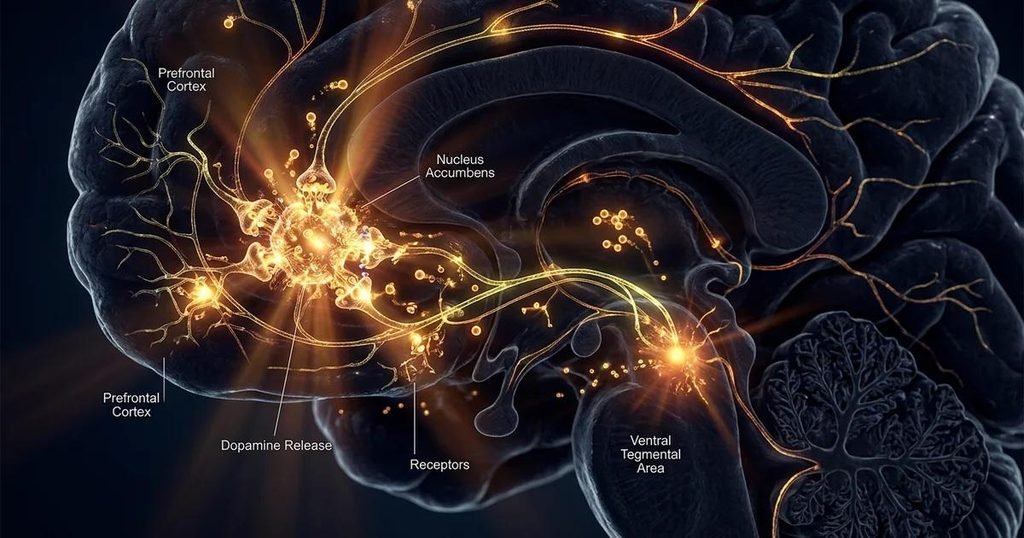
Dopamine is involved in motivation, learning, reward prediction, and the process through which the brain identifies experiences worth pursuing.
An influential concept in neuroscience is the reward prediction error. This describes the difference between an expected outcome and the outcome that actually occurs.
For example, imagine a player who expects to receive an ordinary reward after completing a mission but unexpectedly obtains a rare item. The unexpected outcome may produce a positive reward prediction error, helping reinforce the actions and circumstances associated with that experience.
Over repeated experiences, the player learns which activities, situations, and game-related cues are associated with rewarding outcomes.
This does not mean dopamine simply makes someone happy or that video games automatically create a chemical addiction. Rather, dopamine-related learning processes help explain how rewarding experiences can strengthen motivation and repeated behaviour.

Researchers studying Gaming Disorder have investigated differences in reward processing, cognitive control, and emotional regulation. A 2025 review by Li and colleagues discusses the involvement of brain regions associated with these processes, including the striatum, orbitofrontal cortex, anterior cingulate cortex, and prefrontal cortex.
These findings are relevant, but brain-imaging differences should not be interpreted as proof that gaming permanently changes every player’s brain.
Read the 2025 review on the neural mechanisms of Gaming Disorder.
Why unpredictable rewards can make stopping difficult?
Not all rewards in video games are guaranteed.
A player might complete several missions before obtaining a rare item. Another might participate in multiple matches before achieving a particular competitive outcome. Some games also offer randomized rewards, collectible items, and limited-time opportunities.
This introduces another important concept from behavioural psychology: intermittent reinforcement.
In a continuous reinforcement schedule, a behaviour receives a reward every time the desired response occurs. In intermittent reinforcement, rewards are delivered only occasionally or under particular conditions.
Some forms of intermittent reinforcement can make behaviour resistant to extinction, meaning that the behaviour may continue even after rewards become less frequent.
A familiar example is a player repeatedly attempting to obtain a rare item. Each unsuccessful attempt does not necessarily end the behaviour because the next attempt might produce the desired result.
However, it is important not to assume that every game uses the same reinforcement schedule. Nor should all randomized reward systems automatically be equated with gambling or addiction.
The broader psychological point is that uncertainty can sustain repeated attempts, especially when players strongly value the possible outcome.
When gaming becomes a way to escape everyday life
Reward systems alone do not explain why some people develop problematic gaming habits while others do not.
For some players, the appeal of gaming is closely connected to what happens outside the game.
Imagine someone experiencing academic pressure, loneliness, relationship difficulties, or dissatisfaction with everyday life. In a virtual environment, that person may experience something different: clear objectives, immediate feedback, social recognition, and opportunities to demonstrate competence.
Gaming can temporarily provide a sense of control that may be missing elsewhere.
This is commonly discussed through the psychological concept of escapism.
Escapism is not necessarily unhealthy. People regularly use entertainment, books, sports, films, and other activities to take a break from stressful experiences.
The concern emerges when escaping into a game becomes a person’s main response to difficult emotions.
For instance, someone who feels anxious may start gaming whenever uncomfortable thoughts appear. The immediate distraction provides temporary relief. Over time, the person may become increasingly reliant on gaming instead of addressing the circumstances contributing to their distress.
A 2022 systematic review and meta-analysis by Wang and Cheng examined the relationship between gaming motivations and Internet Gaming Disorder. Their analysis found a stronger association with escapism motivation (r = 0.40) than with achievement motivation (r = 0.32), immersion (r = 0.22), or social motivation (r = 0.20).
These are correlations, not proof that escapism causes gaming disorder. Nevertheless, the findings suggest that the emotional purpose of gaming deserves serious attention.
Interestingly, a more recent systematic review and meta-analysis published in October 2026 examined 119 publications involving 119,730 participants. It found substantial associations between gaming escapism, gaming-related problems, and negative emotional experiences.
The researchers also emphasized the need for better longitudinal research to understand how different forms of escapism develop and interact with psychological well-being.
Sources:
- Wang and Cheng (2022), JMIR Mental Health.
- Kiszka, Strojny and Strojny (2026), Journal of Behavioral Addictions.
The social environment can become part of the habit
Online games are not simply activities that people perform alone. Many are built around communities, teams, competitive rankings, and ongoing social relationships.
This changes the psychological reasons for continuing to play.

A player might initially join a multiplayer game because friends are playing. Eventually, they become part of a team that expects them to participate in scheduled matches.
Missing a session might mean disappointing teammates, losing a competitive opportunity, or falling behind in team progression.
There can also be pressure from limited-time events and seasonal rankings.
In these situations, the motivation to continue playing is not necessarily about enjoyment. It may involve maintaining social relationships, avoiding disappointment, or protecting an achievement that took considerable effort to obtain.
Social gaming can provide genuine benefits, including friendship and belonging. The same relationships can also create obligations that make disengagement more difficult.
This is one reason why gaming behaviour should be examined within its social environment rather than treated exclusively as an individual problem.
Why some players are more vulnerable than others
If gaming systems provide rewards and opportunities for social interaction, why do most players not develop Gaming Disorder?
The answer appears to involve individual differences and personal circumstances.
A 2023 systematic review and meta-analysis published in the Journal of Behavioral Addictions examined 39 longitudinal studies involving 37,042 participants.
The researchers identified 34 potentially modifiable factors associated with Internet Gaming Disorder. These included individual factors such as loneliness and gaming time, interpersonal factors such as peer relationships and social support, and environmental factors such as school engagement.
An important feature of this research is its use of longitudinal studies. Unlike research that measures participants at only one point in time, longitudinal research follows people over time and can provide stronger evidence about which factors precede later problems.
However, even longitudinal associations do not automatically establish causation.
Several factors may interact:
Emotional difficulties: Someone experiencing anxiety, loneliness, or persistent stress may be more likely to rely on gaming for temporary relief.
Self-regulation: Differences in the ability to manage impulses and resist immediate rewards may influence how someone responds to gaming opportunities.
Social circumstances: Limited offline support or difficult relationships may increase the importance of online communities.
Existing behavioural patterns: Gaming may become increasingly central when other activities and responsibilities receive less attention.
Life circumstances: Academic pressure, family conflict, and changes in daily routines can influence how individuals use gaming.
It is therefore misleading to suggest that compulsive gaming is simply the result of weak discipline. The behaviour may reflect a combination of learned responses, emotional needs, and environmental influences.
Source: Longitudinal modifiable risk and protective factors of Internet Gaming Disorder (2023).
What happens when gaming becomes difficult to control?
The consequences of problematic gaming are not necessarily immediate.
A person may initially delay bedtime occasionally or spend more time playing than intended. Over time, these behaviours may become more frequent and begin interfering with other responsibilities.
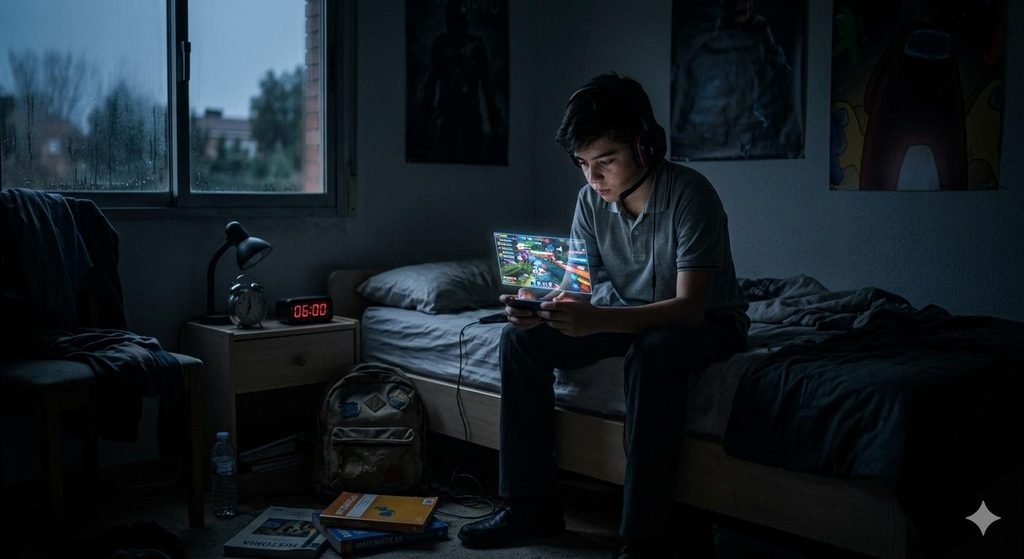
Sleep is one area that can be affected. Late-night gaming can delay bedtime, reduce available sleeping time, and disrupt daily routines.
Education and employment may also suffer when gaming repeatedly takes priority over studying, assignments, or work commitments.
Relationships can become strained when family members or partners feel neglected. Some players may gradually withdraw from activities that previously provided enjoyment.
Psychological difficulties can also become more complicated.
Depression, anxiety, loneliness, and problematic gaming are frequently associated in research. However, the relationship is not necessarily one-directional.
For example, someone experiencing depression may turn to gaming for relief. Problematic gaming may then contribute to additional social isolation, sleep disruption, and stress.
In another situation, gaming-related difficulties may appear alongside pre-existing emotional problems without being their primary cause.
This distinction matters when evaluating treatment. Reducing gaming time without addressing underlying difficulties may not be sufficient for someone who relies on gaming to manage emotional distress.
Is Gaming Disorder really an addiction?
The scientific classification of problematic gaming has generated considerable debate.
The World Health Organization formally recognized Gaming Disorder in ICD-11, reflecting evidence that a relatively small proportion of gamers experience persistent behavioural patterns associated with significant impairment.
The American Psychiatric Association takes a different classification approach. Internet Gaming Disorder appears in DSM-5-TR as a condition requiring further research rather than as an established disorder in its main diagnostic categories.
There are several reasons researchers continue to examine this issue.
One concern is diagnostic accuracy. Gaming is a common recreational activity, and behaviours such as enthusiasm, long playing sessions, or strong social involvement should not automatically be treated as symptoms of a disorder.
Another concern involves the quality of research. Studies sometimes use different definitions and measurement tools, making comparisons difficult.
There is also a risk of overlooking the benefits of gaming. Video games can support social connection, problem-solving, enjoyment, and skill development.
Recognizing Gaming Disorder does not mean that gaming itself is harmful. The challenge is identifying the smaller group of individuals whose gaming behaviour has become persistently uncontrolled and seriously damaging.
The debate is therefore not simply about whether video games are addictive. It is about how to distinguish clinically significant impairment from normal enthusiasm and participation.
Can someone regain control over gaming?
Addressing compulsive gaming usually requires more than telling someone to switch off their computer or console.
The reasons behind the behaviour matter.
If gaming has become a way of avoiding stress, treatment may need to address emotional regulation and the problems that the person is trying to escape.
Cognitive Behavioural Therapy (CBT) is one approach that has been studied for Internet Gaming Disorder. It helps individuals identify unhelpful thinking patterns, understand behavioural triggers, and develop alternative responses.
For example, a player might believe that leaving a game before completing a particular objective means wasting all their previous effort. CBT can help examine this belief and develop a more balanced response.
Other practical approaches include establishing realistic gaming boundaries, protecting sleep schedules, rebuilding offline social activities, and identifying situations that repeatedly trigger excessive gaming.
Where gaming has significantly affected education, employment, relationships, or mental health, professional assessment is appropriate.
The objective is not necessarily to eliminate gaming altogether. It is to restore the ability to choose when to play and when to stop.
The deeper psychological explanation
Online gaming becomes compulsive for some people through the interaction of several processes rather than one isolated cause.
Reward learning encourages repeated behaviour. Unpredictable outcomes can sustain attempts. Social environments create expectations and obligations. Emotional escapism may make gaming particularly attractive during difficult periods.
Individual differences influence how strongly these factors affect a person.
Perhaps the most important distinction is between wanting to play and feeling unable to stop.
A person who enjoys gaming can generally make room for other responsibilities. Someone experiencing Gaming Disorder may continue playing despite repeatedly recognizing the damage it causes.
Psychology does not suggest that every enthusiastic gamer is developing an addiction. Instead, it offers a framework for understanding why a behaviour that begins as entertainment can, in certain circumstances, become difficult to control.