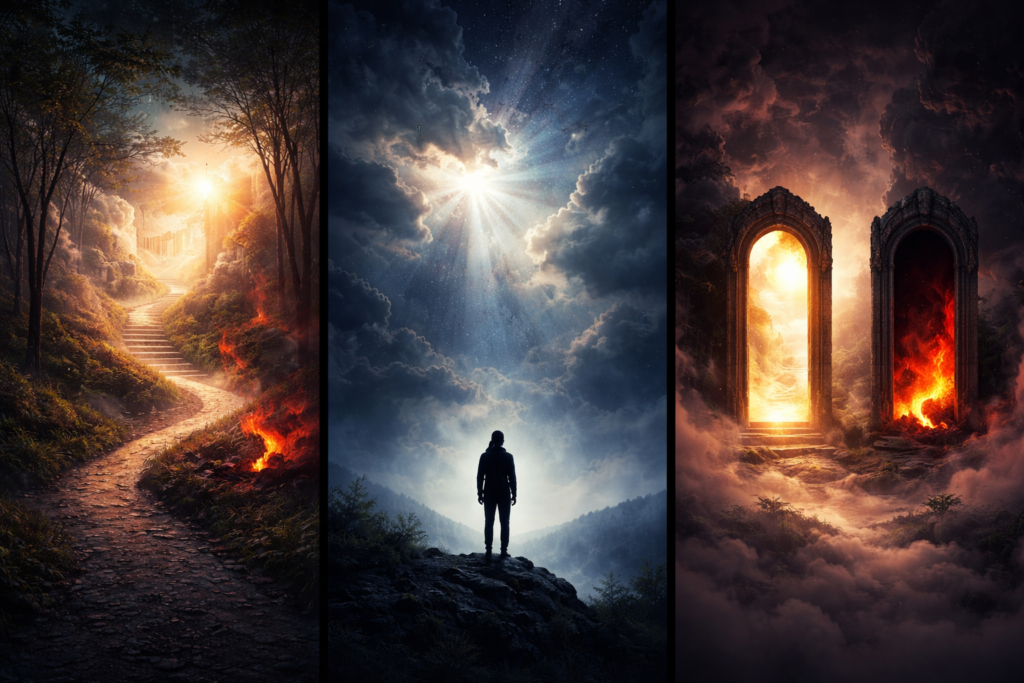
Humans have always been fascinated by what lies beyond this life. “The alive cannot go, and the dead cannot tell.” It’s a riddle that captures the ultimate mystery: no living person has truly experienced the afterlife, and no one who has passed on can communicate it directly. Yet, despite this paradox, countless civilizations, religions, and storytellers have painted vivid pictures of heaven and hell.
The Limits of Human Experience
The first part of the riddle “the alive cannot go” reminds us that no living person has physically crossed the threshold into the afterlife. We rely on beliefs, scriptures, visions, and near-death experiences to imagine what comes next. Ancient texts from cultures as diverse as Egypt, Greece, India, and Mesopotamia all offer glimpses of a world beyond, but none can be empirically verified.
The second part “the dead cannot tell” reflects the silence of those who have passed. Once someone dies, they leave no firsthand account of the afterlife. Stories of heaven and hell, angels and demons, are filtered through interpretation, imagination, and faith. They are human attempts to give shape to the unknowable.
Who Discovered Heaven and Hell?
Technically, nobody can claim to have “discovered” heaven or hell in a literal sense. What we do have are explorers of consciousness, mystics, and religious visionaries who reported experiences that inspired belief systems:
- Prophets and religious leaders like Moses, Jesus, Muhammad, and others described realms of reward and punishment beyond life.
- Mystics and saints across history have shared visions of divine realms or infernal suffering after deep meditation, fasting, or near-death experiences.
- Poets and writers such as Dante Alighieri in The Divine Comedy gave elaborate literary maps of heaven, hell, and purgatory blending theology, imagination, and moral philosophy.
In each case, these “discoveries” are symbolic and experiential rather than empirical. They teach lessons about morality, justice, and human hope rather than providing a literal travel guide to the afterlife.
Why We Keep Asking?
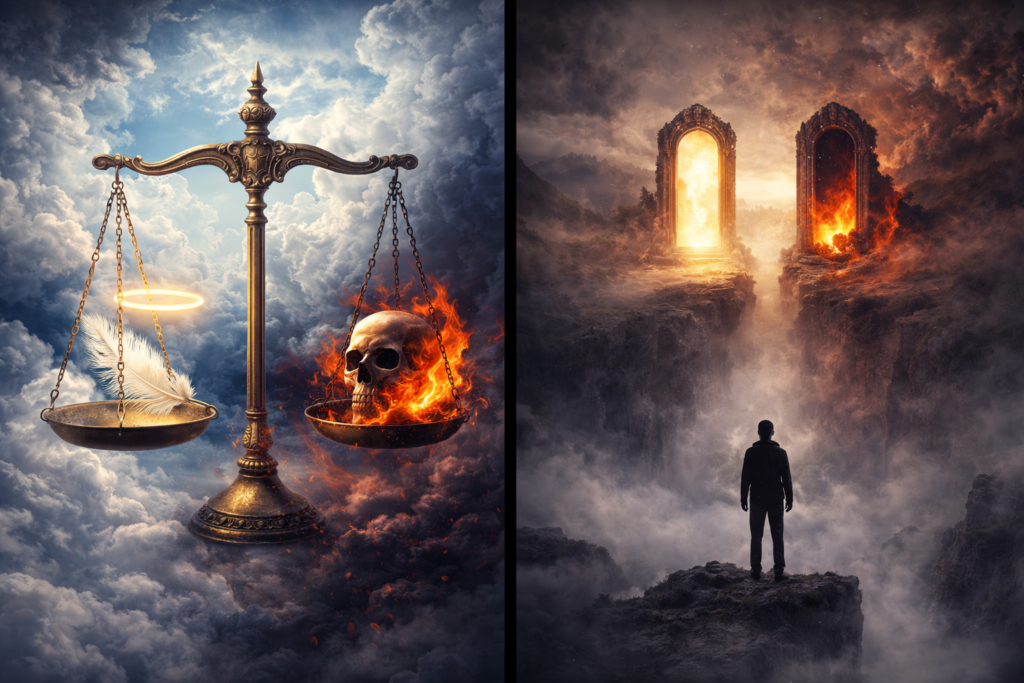
The question persists because humans are natural seekers. We fear the unknown and hope for continuity beyond death. Heaven and hell act as mirrors for our values, our fears, and our dreams. Even though we cannot visit them alive and the dead cannot speak, the stories continue to shape our ethics, art, and spirituality.
Conclusion
“The alive cannot go, and the dead cannot tell” is not just a riddle it’s a reflection of the eternal mystery of existence. Heaven and hell remain undiscovered territories in the literal sense, yet they are discovered daily in human imagination, belief, and experience. Perhaps the real answer is not who discovered these realms, but how they continue to shape the way we live and die.
Read Related Posts